
Most people only know the little button mushrooms in the grocery store. White caps with little chocolatey gills. Maybe they know creminis known more commonly as baby bellas. A few more will know chanterelles, morels, and maybe lobsters based off of local ecology/availability and their grocery store/fine dining budget, but there’s a whole world of mushrooms out there to be found and sampled if you know what you’re looking for.
What many people are shocked to learn when they begin foraging for mushrooms is that gills are not the only spore dispersal method. Mushrooms have developed a lot of ways to disperse their spores and while gills are very common, they’ve also done crazy things like develop into super tasty balls underground with fantastic scents that critters will dig up each season a la truffles. They also develop hugely stinky slime covered outsides that look like alien tentacles a la the stinkhorn family. Today we’re going to talk about a subset of pored mushrooms called boletes and their allies.
Our property happens to be ideal for quite a few types of boletes, leccinum, and suillus. We’re wet and we have a ton of conifers they like to develop mycorrhizal relationships with.
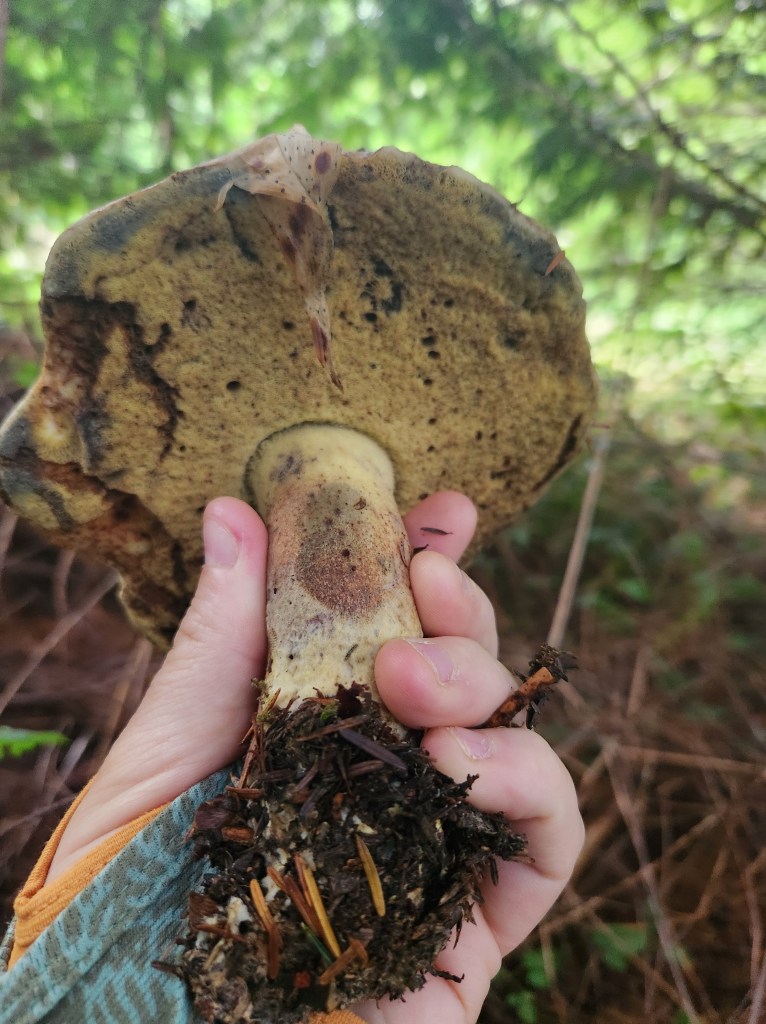
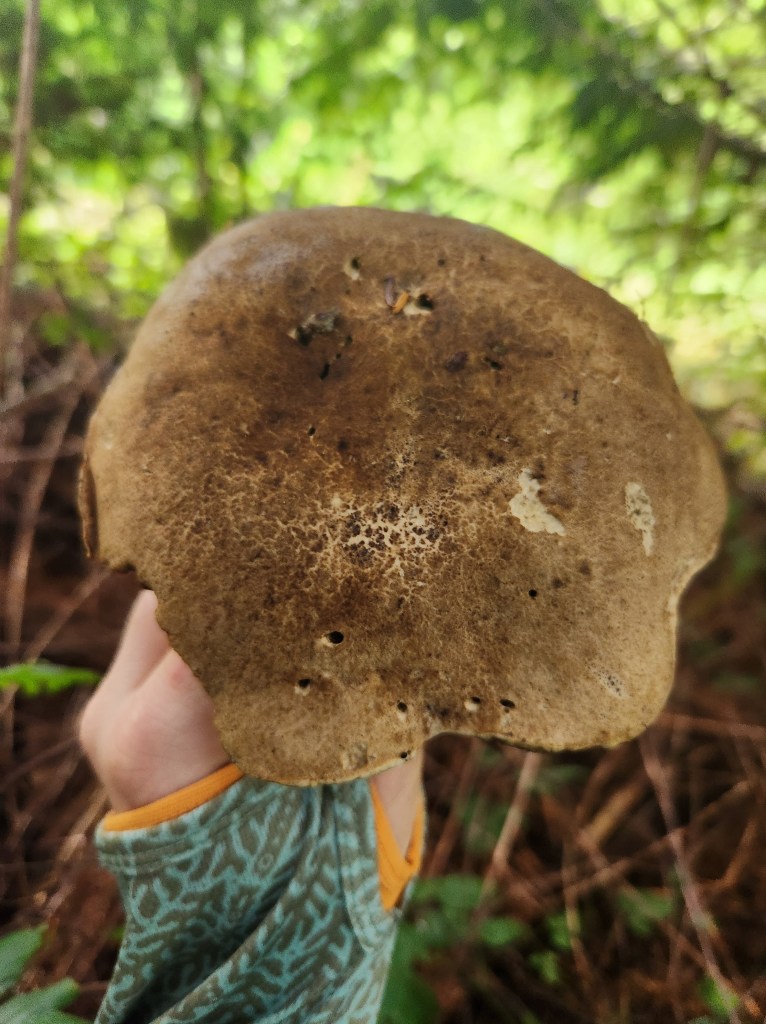
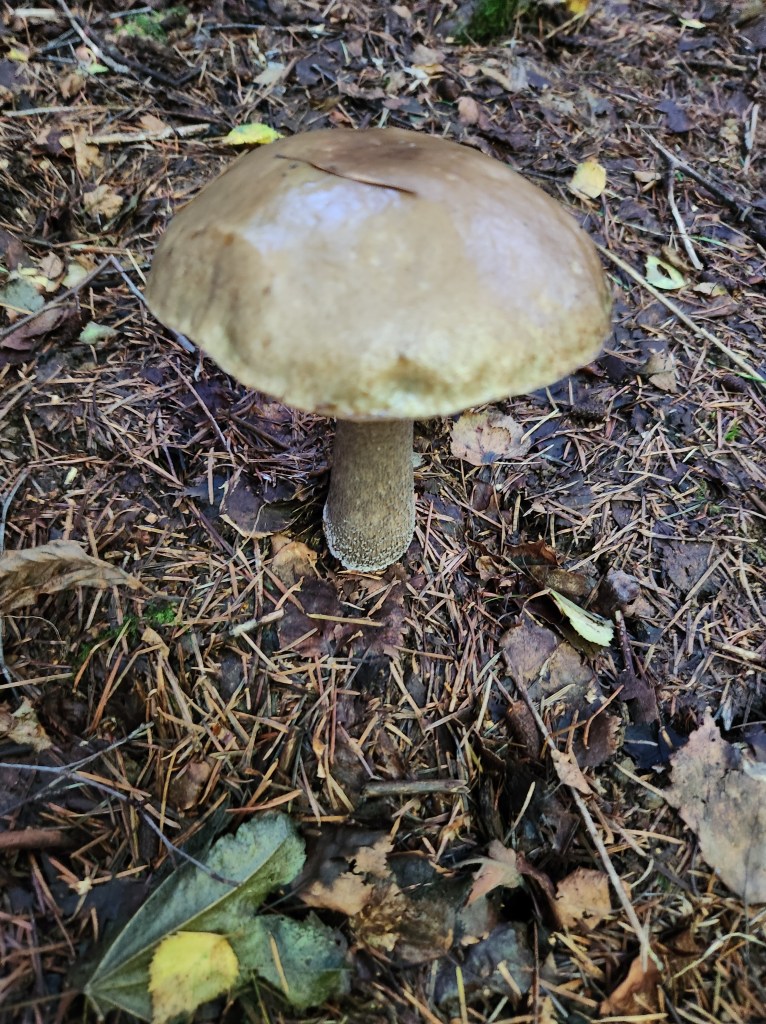
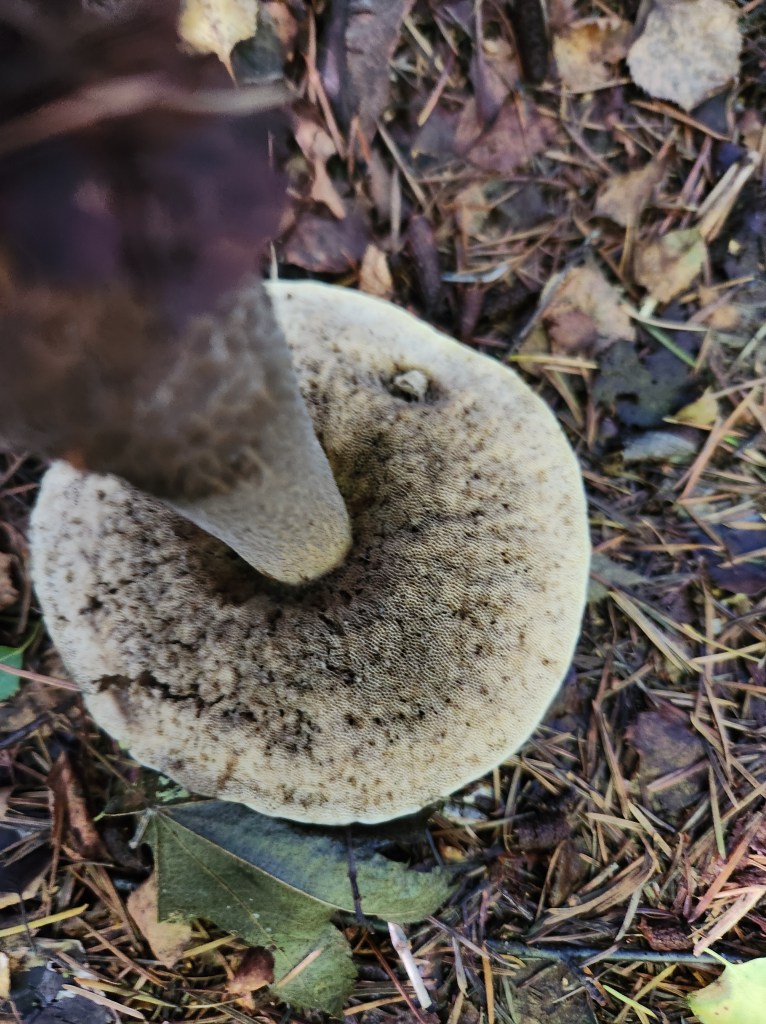
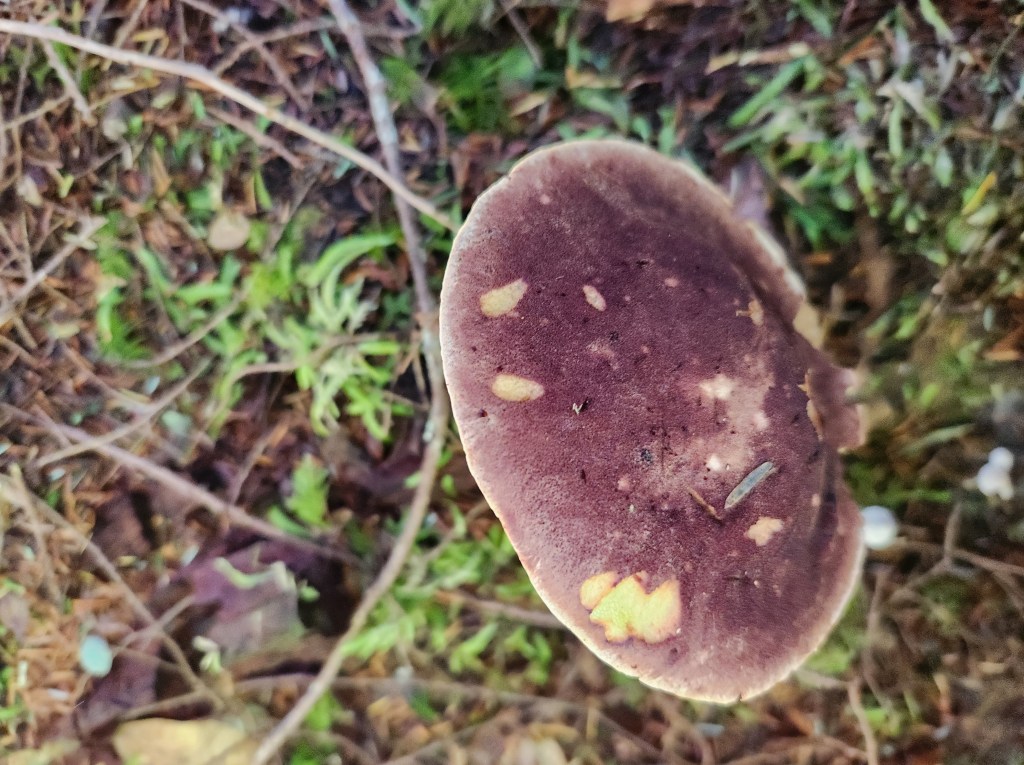
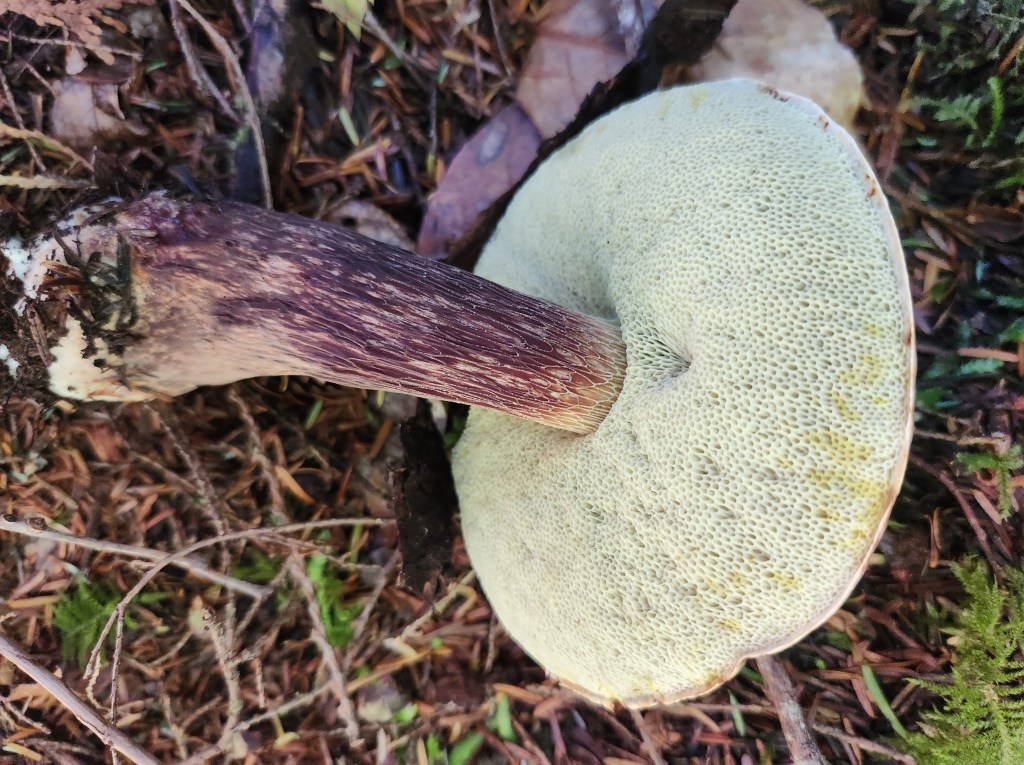
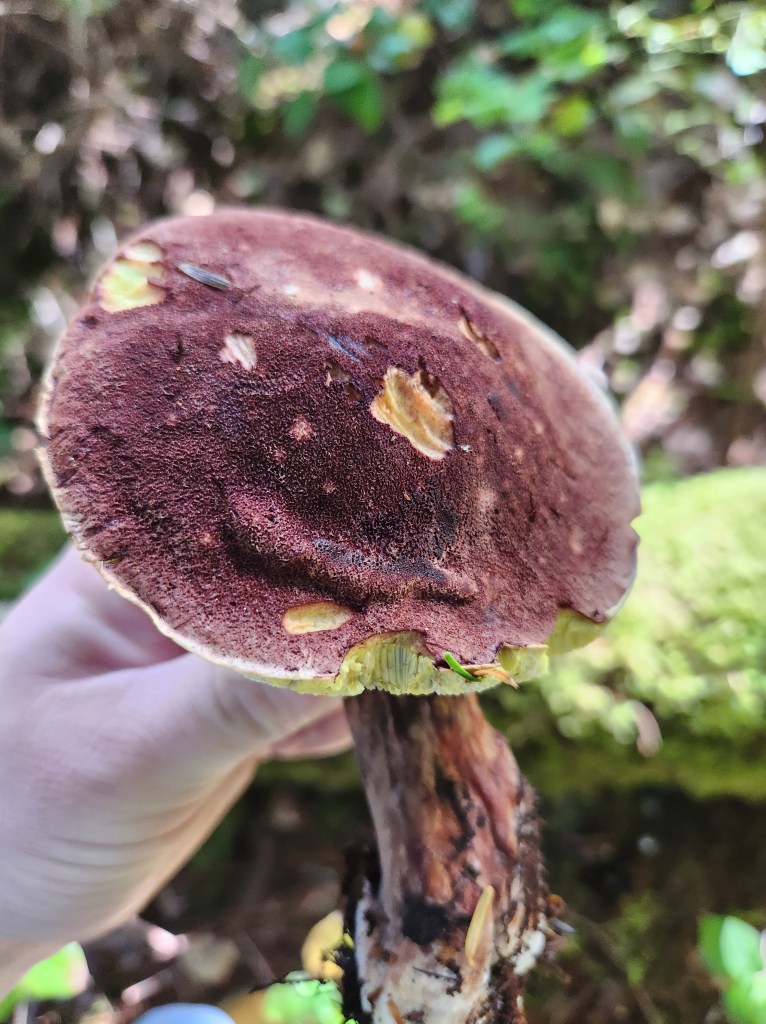
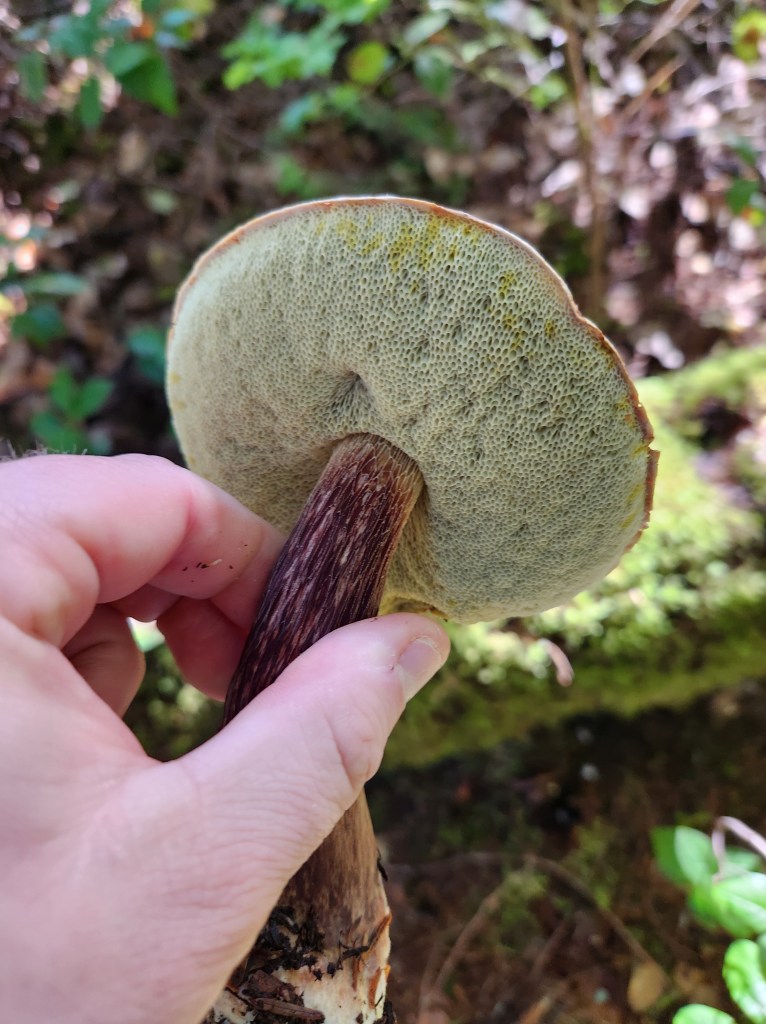
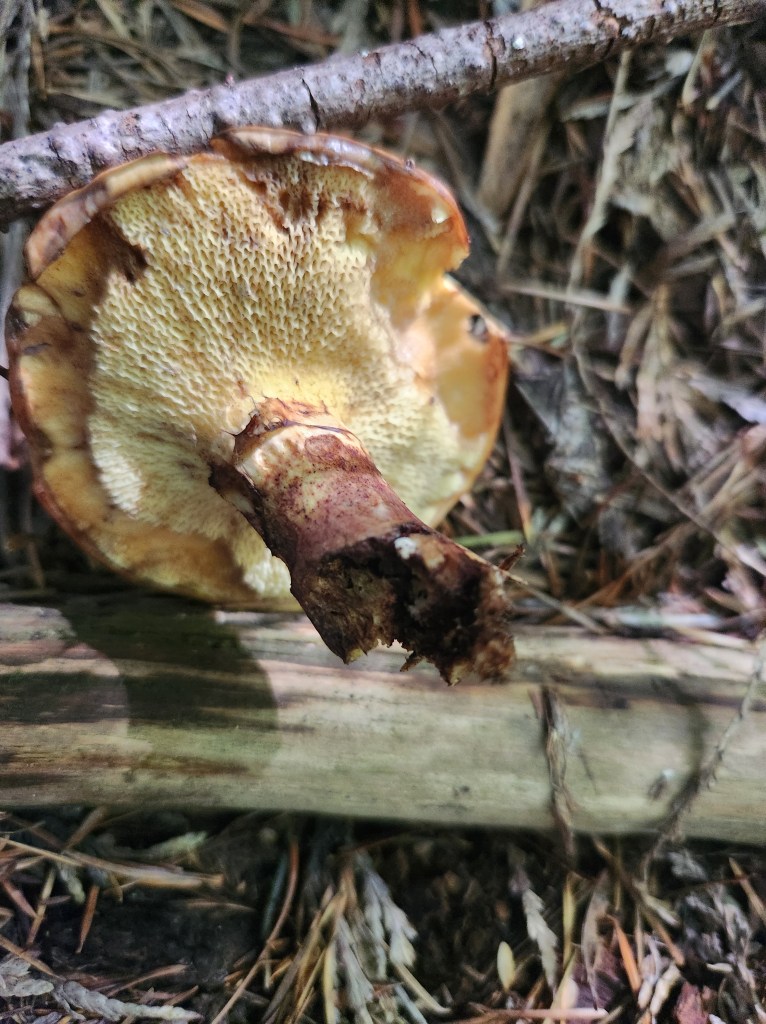
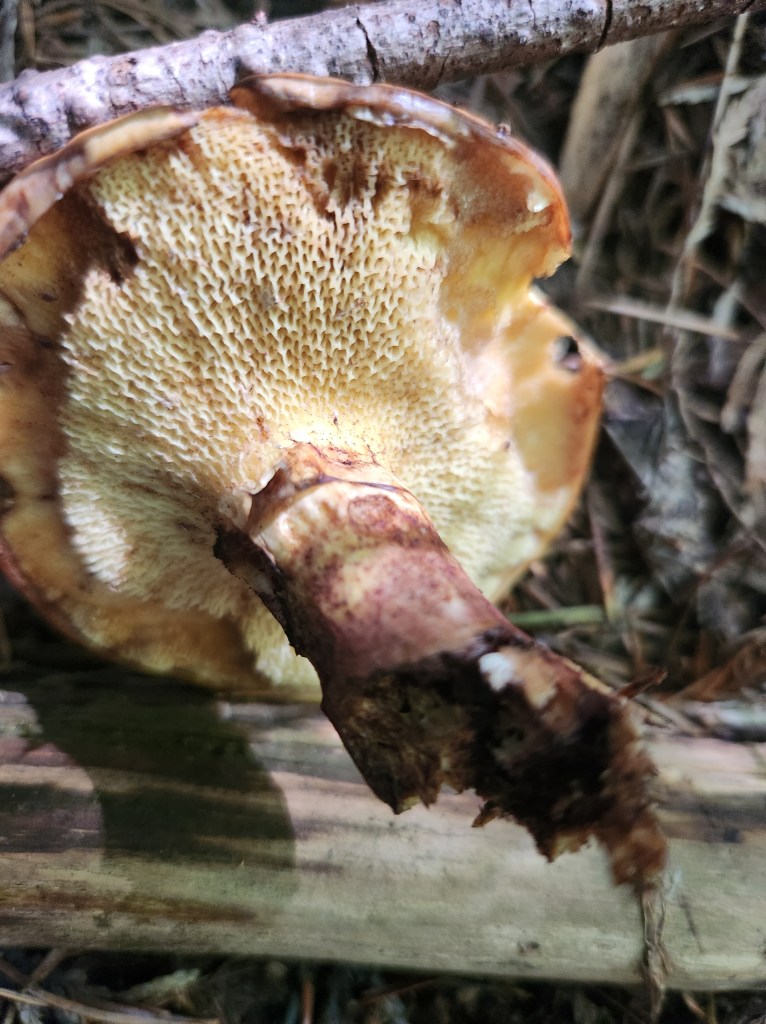
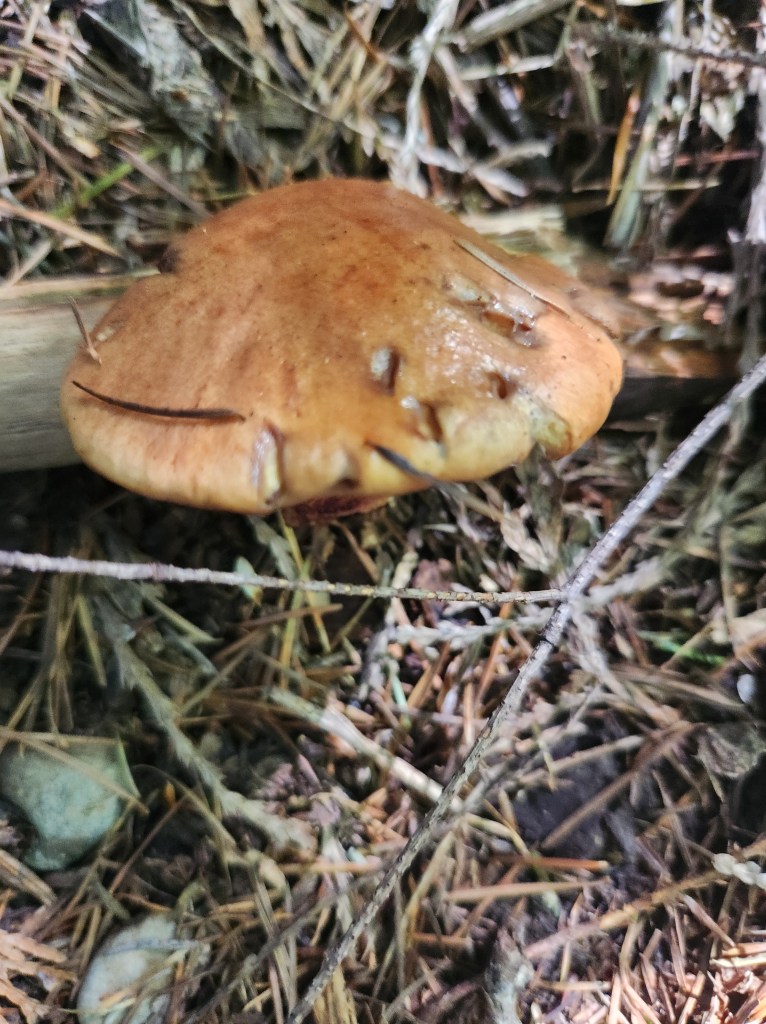
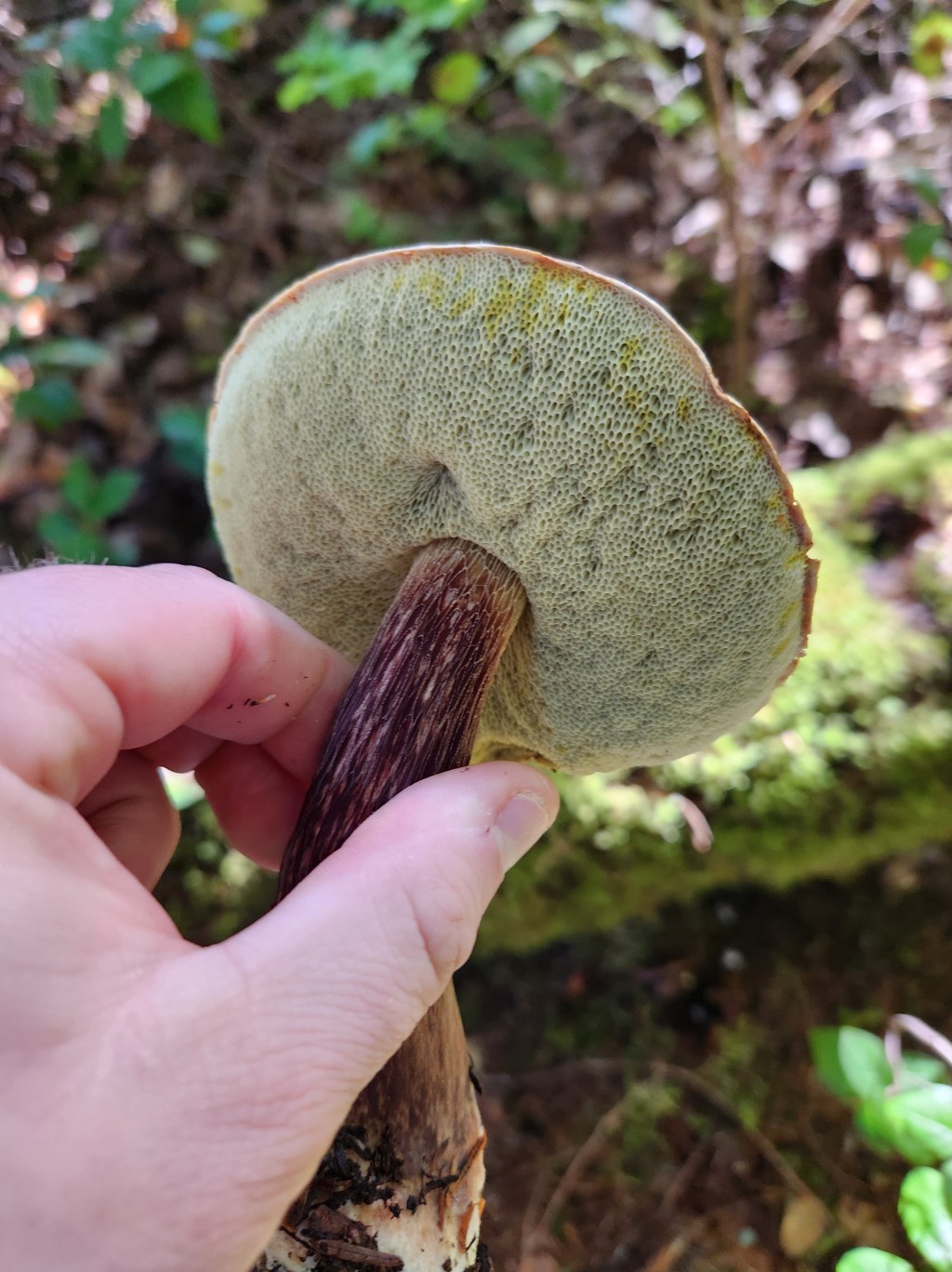
We got to most of these late this year. One of the sad parts about not living out on the land yet is that we can’t take a daily hike to check spots! The top 2 are a Caloboletus and maybe a Leccinum. One is not edible because it is EXTREMELY bitter. The other is of questionable edibility because we got to it late and because I don’t have an affirmed ID of it.
The 3rd mushroom in with the rosy blotchy burnt pancake top is an Admirable Bolete and we found a large troupe of them this year. Unfortunately I didn’t bring my foraging bag and didn’t feel like juggling 20+ mushrooms up the 400′ elevation climb that day. Thankfully, I marked the spot mentally for future years’ flushes!
Jury is still out on our bottom friends that I got to too late. Likely, a Suillus and I’m going to say it’s Suillus Ponderossus. Note the hint of a ring where the cap previously detached from the stipe ( stalk). That’s a clue that this is a suillus. An experienced eye can also see that the ‘pores’ are less straight up and down. I need to get these photos to one of my groups for ID confirmation but I feel fairly confident in my ID so we’ll mark this on the map for next year as well. All in all we’ve had a really successful year for our soft pored mushrooms and I look forward to more next year.


Leave a Reply